Getting Braces: What You Need to Know
minute read


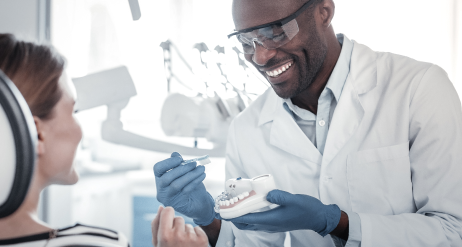
If your teeth aren't sufficiently clean before you get braces, your orthodontist will have to clean them with a polishing paste so that the braces can be properly cemented to your teeth. If possible, schedule a regular professional cleaning appointment with your dentist a few days before you get your new braces so the teeth will be plaque-free prior to your braces appointment. Then, brushing with toothpaste — along with flossing and gargling mouthwash before your appointment — can help make you feel more confident and will speed things along with the orthodontist.
Before your orthodontist gets started, make sure that you understand what type of braces are being used and how they'll affect your teeth. According to the British Orthodontic Society, there are typically three types of braces, which use wires and/or elastic bands to attach the braces together and align teeth:
Your orthodontist will choose the right type of braces based on your specific dental challenges. Luckily, there are several options from which to choose to make braces uniquely yours, such as choosing clear bands so they're less noticeable or letting kids pick out bright, fun colours.
You can expect some mild discomfort as you head home. Your teeth will feel uncomfortable and the new braces can cause ulcers in your mouth, warns the NHS. Try eating soft foods, such as soup, pasta and bananas in the few days following the application, and take over-the-counter pain medication as needed. However, if you experience high levels of discomfort that won't go away with ibuprofen or paracetamol, call your orthodontist for a second opinion. Your discomfort should go away after a few days.
Talk to your orthodontist about proper care of your braces. You'll need to brush regularly and use a water flosser to flush out the food particles that can get caught between braces and teeth; you should also avoid sticky foods. With proper care and by seeing your orthodontist regularly for check-ups, you can keep your teeth healthy while your braces are in place.
Getting braces can be a little nerve-wracking, but the fear of the unknown is usually the worst part. Asking plenty of questions and physically preparing for your appointment should go a long way towards increasing your comfort level. Next stop: a perfect smile!
ORAL HEALTH QUIZ
Take our Oral Health assessment to get the most from your oral care routine
This article is intended to promote understanding of and knowledge about general oral health topics. It is not intended to be a substitute for professional advice, diagnosis or treatment. Always seek the advice of your dentist or other qualified healthcare provider with any questions you may have regarding a medical condition or treatment.